Mariah SHELNUT’S Big Family

Mariah SHELNUT, the daughter of John G SHELNUT and Elizabeth WHITE was child number 5 in her big family.  The first six children appear to be born in Surry County, North Carolina.  They are:

1. Thomas Pinkney SHELNUT   born 1822

2. Eatha Malinda SHELNUT       born 1824

3. Harriet SHELNUT                     born abt 1825

4. Joseph David SHELNUT         born 1826

5. Mariah SHELNUT                born 1828

6. John Junior SHELNUT            born 1830

The family then moved to Georgia where the pitter patter of more little feet were heard:

7. Amanda C SHELLNUT             born 1835

8. Lavina  SHELLNUT                   born 1835 (appear to be twins)

9. Susan E SHELNUT                    born 1838

10. Nancy Jane SHELLNUT        born 1840

BUT WAIT!!  THERE’S MORE . . . . . . . . . . . . . .

Dear Elizabeth White SHELNUT died in 1840, the same year that her little baby girl Nancy Jane was born.  John remarried the next year to Edna (MILLER) COCHRAN in Campbell County (now Fulton), GA.  Edna had been married twice before with at least one son, John MILLER from the first marriage.

1830 Map of Campbell County, GA

1830 map of Campbell County, GA

One historian states that John G.  had another wife even before Elizabeth.  Speculation on their circumstances point to the conclusion that these people saw plenty of death, tragedy, and heartache in their young lives.  Yet, they had children to take care of and life moved forward.

Together, John and Edna had several more children.  One report states that they had 5 together, another says 3.  Edna’s son John MILLER lived with the family as a young farmer, age 20 in the 1850 census.  Here are the names of the three known children they had together:

1. James H SHELNUT                    born 1841

2. Mary “Dolly” SHELNUT          born 1843

3. Rebecca S. SHELNUT               born 1844

It would seem that Edna or Edney was a kind and influential person in the lives of all the SHELNUT children because at least one granddaughter was named ‘Edna’.

Thanks & Genetics

Ralph Waldo Emerson (1803 – 1882) wrote the following poem titled “We Thank Thee”:

For flowers that bloom about our feet; for tender grass, so fresh, so sweet, for song of bird, and hum of bee; For all Things fair we hear or see, Father in heaven, we thank Thee!

For blue of stream and blue of sky; for pleasant shade of branches high;  For fragrant air and cooling breeze;  For beauty of the blooming trees, Father in heaven, we thank Thee!

After watching ‘Finding Your Roots’ (a genealogy program on PBS) that highlighted Harry Connick Junior and Branford Marsalis we learned about genetic testing.  It inspired a  member of our Kindred Tree family to submit a DNA sample to 23andMe, a genetic testing company (yes, the same company that’s been on the national news this week).  It takes about 6-8 weeks to get the results and it will reveal percentages of ethnic backgrounds.

You can watch the episode of “Finding Your Roots” at this link   http://video.pbs.org/video/2203649785/

A HAPPY THANKSGIVING to all.

Where Did the Name “SHELLNUT” Come From?

Mariah is our first introduction to the surname SHELLNUT.  Mariah was born Oct 2nd 1829 in North Carolina and was married to George Washington COCHRAN at age 21.

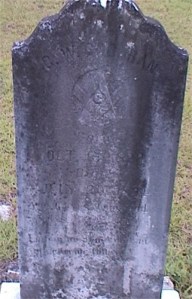
Head Stone of Mariah SHELLNUT in Bethlehem Baptist Church Cemetery, Campbell County GA

Head Stone of Mariah SHELLNUT in Bethlehem Baptist Church Cemetery, Campbell County GA

In the past, speculation tagged Mariah as an American Indian based on her surname that appears as a combination of two seemingly simple words Shell + Nut.  There is no evidence that confirms this guess.  Actually, the records reveal a different and interesting story.

Mariah’s father was John G. SHELNUT and his grandfather appears to have immigrated to the U.S. from Germany changing his name from SCHILDKNECHT to SHELNUT.

According to findagrave.com researcher J. Clark Howard,  John “. . . is the son of Andrew Shelnut and Elizabeth Gentry. His grandfather, Johann Georg Schildknecht, claimed German Descent, and anglicized the name to “John George Shelnut” after arriving in America.” 

The  SCHILDKNECHT  name comes from German, meaning:  occupational name for the page or squire of a knight, who was responsible for his armor and his horse, from Middle High German schilt ‘shield’ + knecht ‘boy’, ‘servant’ (from ancestry.com).

English and German Knights picture from The Library of Congress

English and German Knights – picture from The Library of Congress

From genforum.com, Wayne Shellnut writes about the origin of the families:

“Most of the Germans who immigrated to SC in Dec 1764 appear to have been Palatines and Evangelist by religion. There were many Evangelist Schildknechts living in the Alsace/Lorraine area in the 16th,17th and 18th centuries, particularly near Dossenhiem sur Zinsel (NW of Strasbourg about 80kms). A recent check of French telephone directories indicates that about 180 Schildknecht families live in France, most within 100km of Strasbourg. Most of Alsace/Lorraine was “German” in the 16th,17th,and 18th centuries.

Many Schildknechts also lived in the Baden-Wurtembrg area of Germany in the 18th,19th,20th centuries and at present (less so than in earlier centuries). The Schildknechts living in the north (Germany) in the 16, 17, 18th centuries seem to have been Catholic, again indicating that the Schildknechts of interest, most likely came from the south of Germany. A recent telephone list check indicates that about 280 Schildknecht families are living in Germany today (mostly in the Nortwest and Southwest). In the North there seem to be concentrated within 100kms of Hamburg. In the the Southwest near Stuttgard and Ulm and along the Rhine. It may have been that the Schildknechts migrated from Lorraine to Baden Wurtemburg in the early 1700s. Males with the name Johann Georg Schildknecht seemed to have lived at Rottenacher am Donau (near Ulm) during the 1700-1764 period. There were also some Schildknecht families living just northeast of Kaiserslautern near Goettheim.”

COCHRAN, George W.

George W. COCHRAN was James Elmer HOPKINS’ grandpa.

George W. was born the 15th of October 1829 in South Carolina.  The oldest of six children.  At age 23 he married Mariah SHELLNUT and they filled their home with six children of their own.  It was daughter Mary Elizabeth who bore James Elmer HOPKINS.

He moved to to Campbell (now Fulton) County GA near Atlanta and is buried there.  Here is a picture of his head stone at the Bethlehem Baptist Church Cemetery:  Headstone of George Washington COCHRAN

No picture of George W. has been found but here are images of some of his brothers that could tweek your imagination:

This slideshow requires JavaScript.

Free – Civil War Booklets for Children

In recognition of the 150th anniversary of the American Civil War, My Kindred Tree .com is offering two booklets:  ‘Little Southern Belle’ and ‘Johnny the Confederate Soldier’. These are designed for children.

Send your name and address to mykindredtree@gmail.com if you would like to have a booklet. Indicate if you want the ‘Belle’ or ‘Soldier’ book. These are available until supplies run out.

Can you figure out which of the following ancestors were children during the Civil War 1862-1865?  Click on the name to read more about them:

Aletha DICKERSON

Joseph Martin DENTON

Eula Mae HOLDER LINN

Check out the stories of some of your Civil War era ancestors:

James DICKERSON, wife, children

Inglett

Denton

Remember This Building?

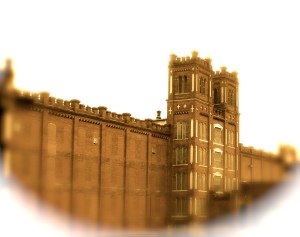
SIBLEY MILL on the canal in Augusta GA

SIBLEY MILL on the canal in Augusta GA

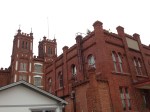
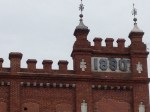
Remember this picture from an earlier post?  It’s called Sibley Mill and was built next to a canal in Augusta GA on a site previously occupied by the Confederate Powderworks.

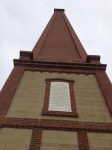
The Powderworks building was the only permanent structure erected by the Confederates during the Civil War in the year 1862 to solve their gunpowder shortage.  It’s length was 2 miles long next to the canal, with raw materials entering in the first of 26 buildings and exiting as gunpowder.  They made 7000 lbs of gunpowder per day and had 70,000 lbs leftover at the end of the war in 1865 when the plant was ordered shut down.

Demolition of the building was ordered by the U.S. government but the smokestack was left as a memorial to the soldiers of the Confederacy.  By 1880, Sibley Mill had begun with half a million bricks bought from the demolished Powderworks at $5 per 1000.   The Mill was designed to resemble the Powderworks with a castle-like fortress appearance.  Two towers were built to house a bell and a water tank.   The center of each wing building has the colorful coat of arms of the Sibley Family.

Sibley Mill produced fabric.  It’s opening yield was disappointing and new machinery was added in 1884.  It had 35,136 spindles and 672 looms.  Over 2 million pounds of cotton were used in 1883 but eleven years later in 1894, over 8.5 million pounds were used.  That’s a lot of cotton.

Some professions of the Mill included: Continue reading

Eula’s Sunbonnet Sue Quilt

Sunbonnet Sue Quilt made by Eula Mae HOLDER LINN

Sunbonnet Sue Quilt made by Eula Mae HOLDER LINN

Eula Mae HOLDER LINN with her 'sunbonnet' on.

Eula Mae HOLDER LINN with her ‘sunbonnet’ on.

Eula Mae HOLDER LINN made this quilt for one of her granddaughters in the late 1950’s.  The pattern she used is now known as “Sunbonnet Sue”.  In the American south (including southern Indiana) the pattern was commonly called “Dutch Doll” . Eula probably came across the pattern in the Nov 1945 issue of the “Work Basket” handicraft magazine that she subscribed to for years.  Click here for a more extensive history of “Sunbonnet Sue”.

Eula hand appliqued the doll figures on the pink fabric with black embroidery floss, using a blanket stitch.  The backing of the quilt is pink and white plaid flannel and the whole is hand quilted.  It is interesting that she did not use any batting in the quilt, making this a perfect summer quilt.

They’ve Never Seen the Light of Day

There are millions of them.

They’re being photographed at record speed.

They’re all over the place and amazingly enough Google doesn’t have anything to do with it.

So, what hasn’t seen the light of day?  Historic records.

It took over 80 years to make a billion records readily searchable but volunteers made another billion available in the last 7 years. 400 million images a year are collected.  230 camera teams in 45 countries are now photographing historic records some of which have never seen the light of day according to Paul Nauta with FamilySearch.

The online website ‘Genealogy in Time‘ keeps a running list of what new historic records are on the internet, how many of what kind and if the service is free or fee based.  Some of their information states:

  • FamilySearch.org has added 2 million WWI draft registration cards from 1917-1918 which is 86% of the entire lot. Almost all men age 40 and under in the U.S. filled out one of these even if they didn’t serve in the war.
  • Archives.com has 3 million Continue reading

‘Mattie’ Elizabeth STEPHENS DENTON

‘Mattie’ was her nickname.  Born Martha Elizabeth STEPHENS to parents Levi and Rachel on the 11 Oct 1871.

She married Joseph Martin DENTON on the 1 Oct 1889 in Chattanooga Tennessee.

The place of her birth has not been firmly identified so if anyone has a source please share.

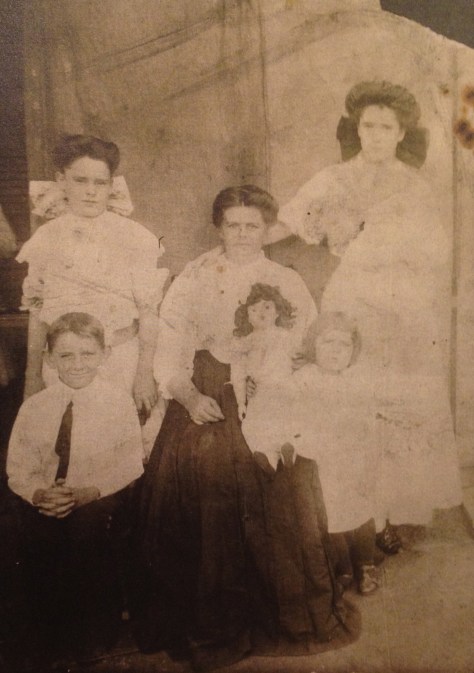
The picture below is a favorite because she is holding a doll in her lap. Note the hair bows.

Picture of 'Mattie' STEPHENS DENTON with children and doll

From left to right: Effie DENTON, Ernest DENTON, ‘Mattie’ Elizabeth DENTON, Gladys DENTON, Myrtle DENTON

Here is a picture of Mattie several years later:

Martha 'Mattie' STEPHENS DENTON  in later years

Martha ‘Mattie’ STEPHENS DENTON

Living in the Good Old Days

During hard or confusing times, we sometimes wish we could live back in “the good old days” when life was simpler.  Well, maybe simpler in some ways but not the way we imagine.  Let’s take a look at some of those days our kindred lived in:

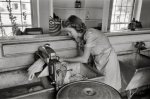
  • Simple washing boards for the care and cleaning of clothes would be considered an upper body workout at the local gym today.  Many living today remember the introduction of the ‘wringer’ washing machine.  A true hand and time saver.  You would push the clothes through two large rolling pins, turned by a handle, to squeeze out water after washing.

    woman washing with wringer washing machine

    The newest technology in cleaning

  • War was simpler:  no drones or poison gas to complicate things.  You would probably see the face of your enemy and in some cases lay in bed at night and hear the simple sounds of cannon and rifle fire.

    Medalion   ofDicey LANGSTON protects her father Solomon LANGSTON from Torries in SC

    Dicey LANGSTON protects her father Solomon LANGSTON
    from Torries in SC

  • Hey, food was organic for many years but Continue reading