You may be wondering why people research their family’s history. Well, here are 5 excellent reasons:
1. Get Rich Quick
Ignorance is cheap and is not bliss when it comes to ancestors. Sure, you probably know something about your parents and grandparents but it’s a stretch beyond that unless you’ve made it a priority to educate yourself. There is a certain richness that you can obtain by knowing your ancestors and nowadays, you can have it quicker than ever with resources available online.
The importance of having, keeping and sharing a family’s history is emphasized in this speech given by David Adelman at the last RootsTech Conference in Feb 2014 titled:
‘Storytelling Super Powers: How to Come Off as Your Family’s Genealogy Hero’
Some highlights include how you can achieve ‘Super Hero’ status amongst your own family. David states that one person can make a huge difference in this life. Studying your family’s history can be brought forward and made alive, pertinent, and useful to our own lives.
What does a Genealogy Hero look like? They are:
Determined – to fight for the truth and find the information they need.
Have Super X-Ray Vision – to see things others cannot and find mysteries.
Stealthy – with the ability to be various places and not be noticed right away. A Ninja quality to be behind the scenes and get people to open up.
Full of Stamina – like the Hulk who channels his determination into purpose and doesn’t give up.
Courageous – and tell the stories that might be painful when uncovered.
A Harvard graduate, David was so moved by the stories of his deceased grandmother gathered by his mother, he started his own family storytelling video company ‘reelgenie.com’ a few years ago.
This video has clips of cartoon super heroes demonstrating the qualities of a genealogy hero. This might be a fun one for the whole family to watch.
For more about storytelling, check out the following sites:
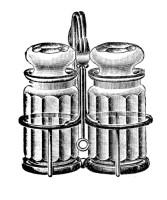
What does W.O.M. mean? Word Of Mouth. The type of story that is verbally passed along. Interesting stories because they have the ability to expand and change by the addition of the teller’s words, intonations or opinions. Details might be lost or enhanced in the retelling but theses types of stories are like salt and pepper. The spice for tastier food and a happy palate. They add a new dimension to the saying “ye are the salt of the earth . . .” when it comes to talking about our ancestors.
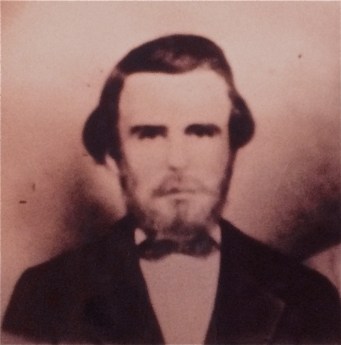
Western Hardy LINN began life in the year 1847 in the town of Whites, Georgia. June 30th was his birth day and was the 6th child of 13 born to Alfred Martin LINNand Frances Ann HACKETT.
He was about 13 years old when the Civil War started and he married his neighbor, Martha A. GILREATH on the 15 of Oct 1872 at the age of 24.
Western Hardy LINN
Western’s nickname was “Wheat”. Apparently “Wheat” wore a hat because in the LINN family bible it states that his hat had a bullet hole in it!
Western and Martha had 11 children together, one of which was Max Augustus LINN.
According to the Editors of the Britannica Encyclopaedia, the Romans believed in a goddess named Flora who was in charge of flowering plants. She ushered in spring and was one of the many deities helpful with reproduction. People revered the coming of spring so much they started a festival for Flora and even built her a temple. So silly!
Can DNA differ from one sibling to another? The experts say “YES”. From an article posted by Anna Swayne on March 5, 2014 on Ancestry.com titled, “Understanding Patterns of Inheritance: Where Did My DNA Come From? (And Why It Matters.)” we read:
Your DNA contains a record of your ancestors, but you aren’t a carbon copy of any one of them. The particular mix of DNA you inherit is unique to you. You receive 50% of your DNA from each of your parents, who received 50% of theirs from each of their parents, and so on. In the chart below [you will need to click on the link to the article to see the chart] you can see how the amount of DNA you receive from a particular ancestor decreases over generations. If you go back far enough, there is a chance that you inherited no DNA from a particular ancestor.
In the center of the 1879 Bible are found several pages of names and dates. They are listed in order of how they appear in the Bible. The typed information is followed by the image of the page. Words in brackets ‘[ ]’ indicates that the handwriting was difficult to read and may have a different spelling. Let us know if you read something different.
For years the old bible has been on our shelf. Published by C. McGarvey in Baltimore MD. 1879, it housed not only Holy writ, but illustrations and a few pages in its center for documenting important family events such as births, marriages, and deaths.
Evelyn BARKER DEAN was the youngest and last birth recorded, penciled in along with her mother’s name and birthdate. Her father’s birth date had been written down in another handwriting, probably his mother’s due to the evidence that William W. BARKER‘s birth hour along with his sister’s was noted. Who better than a mother would remember the hour of birth?
The other names in the Bible were guesses at best and mostly unknown. We’ve still not identified everyone but many of the good people listed in the book are coming into focus thanks to the incredible amount of historical documentation available on line.
This slideshow requires JavaScript.
Look for the next post which will have the details of the family information.


 Can DNA differ from one sibling to another? The experts say “YES”. From an article posted by Anna Swayne on March 5, 2014 on Ancestry.com titled, “Understanding Patterns of Inheritance: Where Did My DNA Come From? (And Why It Matters.)” we read:
 My Kindred Tree