1+1+1 = The Truth

After reading an article by Kevin Cool, a mathematical equation of sorts seemed to evolve when writing about families.  It boils down to:   1 + 1 + 1 = Truth .  Another way to write it is:  a+b+c = A More Realistic Picture of the Past.  

Kevin Cool, the editor Of Stanford Aumni Magazine tells of his adventure in writing the truth about his dad and grandfather in the May/June issue.  His equation adds up as follows:

Currier and Ives Print of Farm and Fielda) ‘. . . a soft-focus version ‘ that casts his dad and grandfather living on a small farmstead with a meandering stream surrounded by pretty meadows with nearby forest full of woodland creatures. Sort of like a Currier and Ives painting.

Interior of a small cabinb) the ‘ grittier version’ of the small 2 room house with no indoor plumbing, water or electricity with grueling winters. Kevin states that both of the descriptions are accurate BUT neither of them is really true.  It was only after an interview with his father that he ‘grasped the complicated reality of his childhood. . . It was a hard life.  And it was a happy life.”

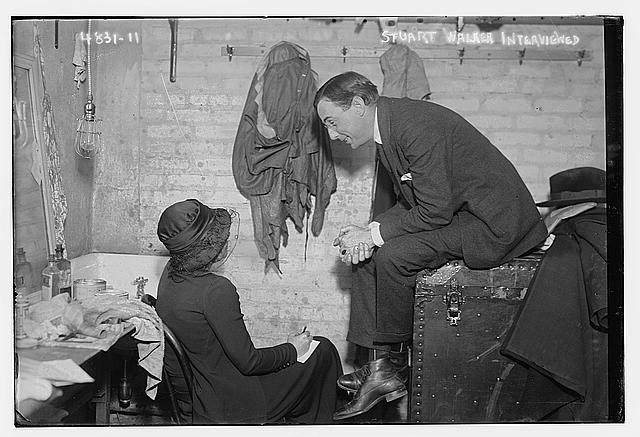
Old Photo of a Kindred Interviewc) “To reveal how people lived . . . you need more than accumulated facts.  You need Continue reading

The BARKER Family

1930 Census of the BARKER Family in Augusta GA

1930 Census of Starne Street, Augusta GA

Home of William and Essie BARKER on Starnes Street in Augusta GA

2018 Starnes Street in Augusta GA as it stands today

Residing on Starnes Street in Augusta, Richmond County, GA in 1930 was the BARKER Family. They are found in the 1930 U.S. Census records.  Census records are interesting reading; mostly fact interspersed with tidbits of fiction.

The head of the household was William W. (Washington) BARKER at age 32.  ‘M’ stands for male and the number ’19’ on his line of information tells his age when he married.  He worked as a ‘Car Inspector’ for the Railroad.

Essie E. (‘E’ is really Lee) BARKER is William’s wife, age 35 and married at age 22 according to the record but she was actually 25 years old when she married . . . but who’s counting?

Daughter Evelyn BARKER is 8 years old in this census.

William and Essie lived at the Starnes Street house until about 1960 and Evelyn lived there for her entire childhood.

William and Essie BARKER on Starnes Street

William and Essie BARKER abt 1959 standing in front of the Starnes Street Home

Image

Just a Match Book, or More?

It’s just a matchbook cover but when I spotted it in a tin full of assorted matchbooks at a garage sale, it stood up and shouted to me “HERE I AM !!!!!!!”

 This is a matchbook that Charles HOPKINS‘ place of employment, “The Independent Life & Accident Insurance Company” used for years.  They must have made a few gazillion of them with half of that gazillion in our house.

It’s amazing how strong memories develop from childhood.  Smells and visual icons are like time machines for me, traversing years in mere seconds.

I’d never seen the Statue of Liberty but that was no reason for me not to know who she was.  Everyone knows her.  And even though the company was headquartered in Jacksonville Florida instead of New York, that was no reason not to use her as the main icon for the company.

Paper matchbook with scalloped edges, yellow with gold and black Statue of Liberty in center with gold surround of Independent Life Insurance Company.

The Last Two Letters of James DICKERSON

This slideshow requires JavaScript.

Understanding and forgiveness appear in Letter 11.  The realities of war are described and as ever, James has a keen sensitivity to crops and prices of goods in the area.   He still has no money and is concerned about his family having shoes.

The last letter, number 12 is penned by someone other than James due to his injury.  He is in a Confederate Hospital in Richmond, VA.

Letter 11

Virginia  richmond      June the 20th

Dier wife      I take the plesier of droping you a few lines to informe you that I am well at this time and I hope this will find you all well      I reseved youre leter dated the 11 witch please me vary mutch to her that you was all well and you have become reconsiled about your spyses       I a sorra to think you had that opinion of mee       Wright pritchet died last night and his brother cant carry him home       it cost $40-$50 dolers to barry ethring so ther is no chance for the pore       I int to git my tipe to you for there is no chances        there is one hundred men in this company and about thirty four duty tha ar qurd of them that —- it gives them the brake         tha ar fiting every day in  – ———the ole gineral burnt everything up the tents and everything        we have only what we had on our backs        tell my farther [father] [1] that tome [Tommy] [2] is her and looks as well as I ever seen him       his ridgment is in our brigade       Corne is three dolars a bushel her      sirup is five dolars a galon       are you making aney corne       I reseved youre leter that tha ole mail in one day the 17       Yall rote to mee wether I got pleanty to eat or not       I doo sutch as it is       Bread and meat       wheat bread at that         wee git som beef ons a week       I have got a bunch of wheet      Crops is vary good her       you don’t no how glad I would be to see you all       I doo dreame about you aften times        I think if I doo ever git out of this I will stay at home the balans of my dayes     I don’t hav eny idea that tha war will last mutch longer Continue reading

What Else Happened in 1862?

1862

James DICKERSON’s letters to his wife Clary were written in the year 1862.  Of interest are other events that happened the same year:

  • The first income tax was implemented;  3% of incomes less than $600.
  • Paper money called ‘greenbacks’ were issued to the United States by President Abraham Lincoln.
  • The United States Mint was established by Congress in Denver CO.
  • Bucharest was proclaimed the capitol of Romania.
  • Julia Howe published “Battle Hymn of the Republic”.
  • The U.S. Navy’s first ironclad ship was launched and in the same year their ironclad ship ‘Monitor’ sank off Cape Hatteras, N.C.
  • Congress outlaws polygamy.
  • Emancipation Proclamation was issued by Abraham Lincoln, freeing slaves in the U.S.
  • The Battle of Antietam was fought and was the single most deadly day of the Civil War with 23,110 casualties.
  • 1st pasteuriztion test completed by Louis Pasteur and Claude Bernard.
  • The bowling ball was invented.

150th Anniversary of the Civil War

We are in the 150th anniversary of the Civil War 1861-1865.  There are many events commemorating this piece of history coming up in the next year or two. Many of our kindred dead were involved in this war.  It’s a great opportunity to enrich your lives while the anniversary is being observed.

You might find something of interest by looking at the Civil War Sesquincentennial Events site.  Just enter a state to see if anything is happening where you’re at.

Civil War Reenactment at Kennesaw Mountain National Park

For instance, this summer on July 28th there is an Artillery Demonstration at Kennesaw Mountain National Park, just northwest of Atlanta.

The Kennesaw Mountain Website posts tidbits of facts named “Did You Know”.  An example of one is below.

Did You Know –  Confederate armies were usually named for states or regions where they campaigned, while union armies were named after major rivers.  Thus the Confederate Army of Tennessee opposed to the Union Army of the Tennessee.

An 1862 Easter

Happy Easter.  Thoughts and hopes of restoration are hard to resist when learning about our kindred ancestors who’ve moved on, especially the many who suffered and died in war.  I found an Easter sermon written in 1862 at Civilwar.com that sheds light on concerns and challenges of the day.

In addition, I’ve included a couple of videos about Aimee Copeland, a young woman who recently suffered the challenges of amputation.  She is an inspiration as are many others in our own family.

The sermon does not lack for words, thought or content.  Death is likened to sleep.  Just as the body requires sleep and rest for restoration, so does the soul require death to be restored, calling it “tired nature’s sweet restorer . . . ”
screenshot12

“Now, such is the effect of the body’s visit to its grave . . .  all weary and worn . . . They go there with the furrowed brow, the hollowed cheek, the wrinkled skin—they shall wake up in beauty and glory. The old man totters there, leaning on his staff. The palsied comes there, trembling all the way. The halt, the lame, the withered, the blind journey in doleful pilgrimage to the common dormitory. But they shall not rise decrepit, deformed, or diseased, but strong, vigorous, active, glorious, immortal!

Out of the 3 million men who fought in the Civil War on both sides, most of them had a rural, agrarian background like James DICKERSON.  They had a keen understanding of the growing seasons and the importance of seeds with their renewal or germinating power.

“The shriveled seed, so destitute of form and comeliness, shall rise from the dust a beauteous flower. A green blade all fresh and young shall spring up where before there was the dried decayed grain . . . “

The casualties of war included not only loss of life, but amputations and disfigurement as well.   The reference to ‘the holy martyrs’ who suffered similar trials gives way to hope of restoration.  Back then in 1862, most relied on faith in God to make sense of death.  But today we have . . . uh, well. . . let’s see . . . about the same thing.

“Well said the holy martyrs, when their limbs were being torn away—’We cheerfully resign these members to the God who gave them to us.’ Our members are not ours to hold or lose, no torment can rob us of them in reality. For when we wake up in Christ’s likeness it will not be as halt or lame, but full of strength and vigor—more comely than earthly sons of men . . . The winter of the grave shall soon give way to the spring of resurrection and the summer of glory. Blessed is death, since it answers all the ends of medicine to this mortal frame and through the Divine power disrobes us of the leprous rags of flesh, to clothe us with the wedding garment of incorruption!”

A modern story of inspiration and bravery in the face of bodily trials is found in Aimee Copeland, a young University of GA student who suffered a gash to her leg from a river rock when she fell from a faulty home made zip line.  An infection in her leg gave way to a flesh eating necrosis that led to amputations and organ failure.  Not only did she beat the odds and survive but Continue reading

‘We have some hard fiting . . . ‘ Letters 7 and 8 of James DICKERSON

James sounds very low in letter 7.   He’s ill and homesick.  His living conditions are poor and he’s seen casualties of battle, one of them being the death of a friend.  His request is for a momento of hair and the written word from Clary.  Letter 8 appears to be written 3 days after letter 7.  He is in better health but describes the cold, hunger, and anticipation of battle they are living with.  Sickness is amongst the Regiment. He wants to know about home life and remains an ‘affectionate husban.”

Letter 7

Richmond Virginina       June the 5 1862

Dier wife      I take my seet this morning to let you now that I am not well at presant      I not got none leters from you in along time      I think sometimes that you have stop riting      I ly down in a hole of water and get up out a hole of water       wee have some hard fiting everyday      Mose Suten got kiled and great many was wounded      I her that all men that is over thirty five [1] can go home after the 16 of June and if it is so you may look for mee      I have nothing to rite to you of importans      I want you to make mee a brade of your hair and send it to mee      I want you to rite to mee      I have rote ten or twelve leters and reseced foure      tha balans gits leters evry week      I will come to a close saing I am your beloved husband until Deth       J. H. Dickerson to Mrs. C. Dickerson.

[1] James is age 40.

Letter 8

Richmond Virginia the 8   1862

Dier wife       I take this opertunity of droping you a few lines to informe you that I am well at presant and hopeing these few lines may fine you all well       I want to her from you all       any  how I am her in the woods with one blanket and napsack and hot [not] half enof to eat        we are looking evry minet for a fight       we can see plenty of yanks one the other side of the river       we are sheling each other every day       Dick Bias receve a leter from his wife that stated tha had bin a fight in youre settement       I want you to rite to mee if you plese that all git leter but mee      I would be glad to her from you       now is the time to rite       this makes twelve leters I have rote to you      we have a great deal of sickness       John Holwer left us at ginee and i dont no where he is tha loued he would die [1]       all the sickness is from the mesels [2]       I dont want to stay this part of the world      it is cold and too wet       it was cold last night       I want you to rite to mee wether your raking my wheet or not and how youre comin and how you came on rasing chickines and what your hogs is a doing      Jo gilping [3] is home sick and William B too and I am sorter soo my love is all I will to you       the reson I didant pay the potea tha [they] tole [told]  me that tha would go beter without       you must not think hard of it      escuse my hand rite for i had to rite it one my napsack by a fire so I will close       I shal not rite until I git a leter from you       nothing more at presant onley I remane youre afectionate husban until Deth   J. H. Dickerson to Mrs. C. Dickerson

[1] ‘tha loued he would die’ is probably ‘They [be]’lieved he would die’.

[2] A confederate soldier had a 1 in 8 chance of dying in battle and a 1 in 5 chance of dying of disease according to Eric Either (Dec 2003 Civil War Times).  Measles was only a part of the disease epidemic.  Dysentery was number 1 with typhoid, pneumonia, tuberculosis and malaria contributing.  It’s hard to imagine now,  but the folk of the day did not understand that contaminated water and poor sanitation were the major facilitators of so much disease.

[3] ‘Jo Gilping’ is Joseph M.Gilpin married to James’ sister Elizabeth Dickerson Gilpin.  His death on Sept 7th of that same year was communicated to his wife by a letter from W. J. Proctor, 1st SGT in company D.  He writes,

“I embrace the present opportunity to communicate to you the painful intellegiance of the death of your husband.  He died this morning about sunrise at the field hospital about one mile from the company.  He had been complainine for a day or two.  Yesterday mornin he seemed to be quite sick and only lived until this morning.  I am informed that he died from inflamation of the bowels (gun shot). . . I deem it the duty of some member of this company to tell you of the sad fact and take the task upon myself.  I’m not very well aquainted with you but am well acquainted with your father . . . “

5 Fashion Tips from 1862

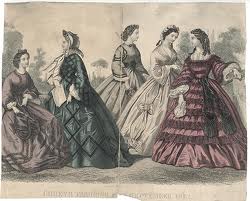
Even though no picture of Clary DICKERSON has surfaced yet, we can imagine a little bit about how she looked.

Five fashion tips that were popular during her day:

1. Part your hair in the middle.

The popular hair style of the day was to part the hair in the middle with the long tresses rolled and/or  braided into a low bun at the nape of the neck.  In the evening, the pieces of hair could be curled and hung in ringlets.

2. Wear a hoop.

The modern ones made of steel or brass are best but if you can’t get your hands on one of these, your old whalebone or rattan hoop will do.

3. Purple is IN!

The first colorfast synthetic purple dye had just been developed.  Awesome.

4. Full Skirts are Back

Clary might have worn clothes similar to these Civil War re-enactors in the following video:

5. Sheer Elegance

For those warm summer evenings, sheer cotton organdy is the way to go.  You don’t want to miss the 1862 Fashion Show by Robin Stokes.  Live models wear remakes of dresses from the ‘Godeys Lady’s Book’, a catalog of dresses.  It’s fun.  Click here to see it:  1862 FASHION SHOW.

1862 Godey's  Dresses

Next post?  Watch for 2 more letters to Clary from her husband James. He likes her hair . . .